






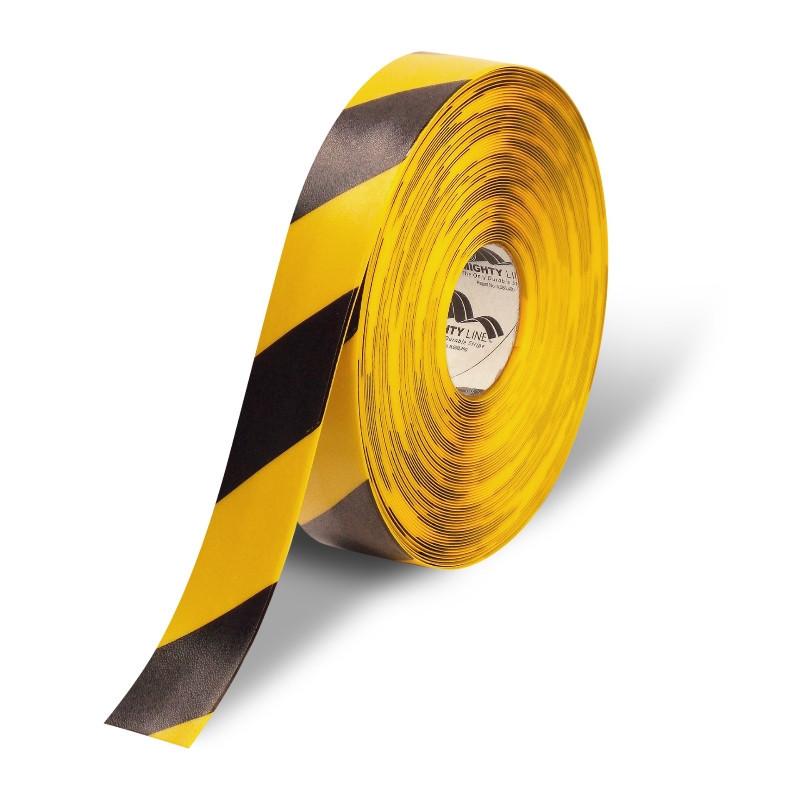

Warehouse Floor Marking Color Guide: OSHA Requirements & Common Color Uses
August 2026 | References: OSHA 29 CFR 1910.144, 1910.145 and 1910.176
Standardized floor marking colors can help employees and visitors identify aisles, hazards, equipment locations, storage zones and work areas throughout a warehouse or industrial facility.
OSHA does not require one universal color system for every warehouse floor-marking application. OSHA establishes specific uses for red and yellow in certain safety contexts, while other floor marking colors may be assigned through applicable standards, industry practices or a facility's documented visual-control system.
Warehouse Floor Marking Color Guide
The examples below can help facilities develop a consistent visual-control system. Unless specifically identified as an OSHA requirement, these color applications are examples of common facility uses rather than universal OSHA-required floor marking colors.
| Visual | Tape Color | Regulatory Context | Common Facility Uses |
|---|---|---|---|
 |
Green | OSHA 1910.145 uses green and white for safety-instruction signs. This does not establish a universal OSHA requirement for green floor tape. | Facilities may use green for first-aid areas, eyewash stations, safety showers or other safety-related locations when those uses are defined in the facility's visual-control system. |
 |
Red | OSHA 1910.144 identifies red for specified danger and emergency-stop applications. OSHA 1910.145 also establishes red as part of the design requirements for danger signs. | Facilities may use red to reinforce designated danger areas, emergency-stop locations or other areas where red is appropriate under applicable requirements and facility procedures. |
 |
Yellow | OSHA 1910.144 identifies yellow as the basic color for caution and for marking physical hazards involving risks such as striking against, stumbling, falling, tripping or being caught between objects. | Yellow is commonly used in facility visual-control systems for caution areas, traffic routes, aisle boundaries and locations where physical hazards need to be made more visible. |
 |
White | OSHA does not establish a general requirement to use white floor tape for warehouse floor marking. | Facilities may use white to identify equipment boundaries, workstations, racks, carts, benches or storage locations. |
 |
Orange | OSHA 1910.144 does not establish orange as a universal floor-tape color for warehouse floor marking. | A facility may assign orange to equipment areas, inspection zones, warning locations or another clearly documented category within its visual-control system. |
 |
Blue | OSHA does not establish a general requirement to use blue floor tape for warehouse floor marking. | Facilities may use blue for work in progress, equipment, materials or another clearly documented facility-specific category. |
What Does OSHA Require for Floor Marking?
OSHA requirements depend on the hazard and application. OSHA does not publish one universal color code that applies to every warehouse floor marking.
- Red: OSHA identifies red for specified danger and emergency-stop applications.
- Yellow: OSHA identifies yellow for caution and for marking certain physical hazards.
- Permanent aisles and passageways: OSHA 1910.176(a) requires permanent aisles and passageways to be appropriately marked where mechanical handling equipment is used. The standard does not specify a required color for those aisle markings.
- Safety signs: OSHA 1910.145 contains separate requirements for accident-prevention signs, including color requirements for certain danger, caution and safety-instruction signs. Those sign requirements should not be treated as a universal floor-tape color code.
- Other floor marking colors: Additional colors may be defined according to applicable requirements, recognized practices and the facility's documented visual-control system.
Does OSHA Require Yellow Floor Tape for Warehouse Aisles?
No universal OSHA rule requires every warehouse aisle to be marked with yellow floor tape. OSHA 1910.176(a) requires permanent aisles and passageways to be appropriately marked where mechanical handling equipment is used, but the standard does not prescribe a specific aisle-marking color.
Yellow may still be appropriate where it communicates caution or a physical hazard consistent with OSHA 1910.144, or where the facility has adopted yellow as part of a consistent visual-control system.
How to Standardize Warehouse Floor Tape Colors
- Review applicable requirements. Identify the OSHA regulations, fire codes, industry standards and internal safety requirements that apply to your facility and specific hazards.
- Identify areas that need markings. Review permanent aisles, pedestrian routes, forklift lanes, equipment areas, storage locations, work cells and restricted areas.
- Assign a clear meaning to each color. Keep color meanings consistent and avoid assigning the same color to unrelated purposes.
- Create a facility color legend. Document what each color means and make the legend readily available to employees and others who need to understand the system.
- Use signs, words and symbols when appropriate. Do not rely on floor color alone when a hazard or instruction requires additional communication.
- Train employees on the system. Make sure employees understand the meanings assigned to colors, markings, signs and designated areas within the facility.
- Inspect markings regularly. Replace damaged, worn or unclear markings and update the system when equipment, hazards, workflows or facility layouts change.
Common Floor Marking Mistakes
- Presenting common warehouse color conventions as universal OSHA requirements
- Claiming that OSHA requires a specific floor-tape color when the applicable regulation does not specify one
- Using inconsistent meanings for the same color across departments or facilities
- Relying on floor color alone when signs, labels, guarding or other hazard controls are needed
- Failing to document and communicate the facility's color system
- Leaving outdated markings in place after equipment, workflow or layout changes
- Allowing permanent aisles, passageways or designated access areas to become obstructed
Official OSHA References
- OSHA 29 CFR 1910.144: Safety Color Code for Marking Physical Hazards
- OSHA 29 CFR 1910.145: Specifications for Accident Prevention Signs and Tags
- OSHA 29 CFR 1910.176: Handling Materials — General
Shop Mighty Line Floor Tape Colors
Choose floor tape colors that support a clear, consistent and documented visual-control system for your facility.
Shop Mighty Line floor tape, explore 5S and 6S floor markings or contact Floor Tape Store for product and ordering assistance.